

Jewelry inspired by cities, compelled by nature

I draw inspiration from the changing urban environment of our cities—the architecture, histories, and relationships to the natural landscape. Historic maps, decorative ironwork, plasterwork, and traces of the built environment become starting points for contemporary jewelry.
Through etching, forming, patina, and polish, I translate these fragments of place into pieces meant to be worn and held. I am drawn to the way cities change over time: where waterways, streets, buildings, and memory overlap, disappear, and re-emerge.

My studio practice has developed through a slow, hands-on engagement with materials, process, and place. I work primarily in brass, copper, and sterling silver, using heat, image transfer, etching, hand-applied patinas, soldering, and hammer forming to develop each piece. The marks and variations that emerge through the process are part of the work’s character.
Living and working between New Orleans, Washington, DC, and Alexandria keeps me in conversation with coastal, urban, and historic environments. My work is carried by select museum shops and galleries, and has been supported through grants, fellowships, residencies, and exhibitions.
I welcome visitors to my studio at the Torpedo Factory Art Center in Alexandria, Virginia, and my work is also available through select museum shops and galleries in Louisiana.

Behind the Scenes
Archival map from the Library of Congress
Hammering rivets to connect metal
Acid etching
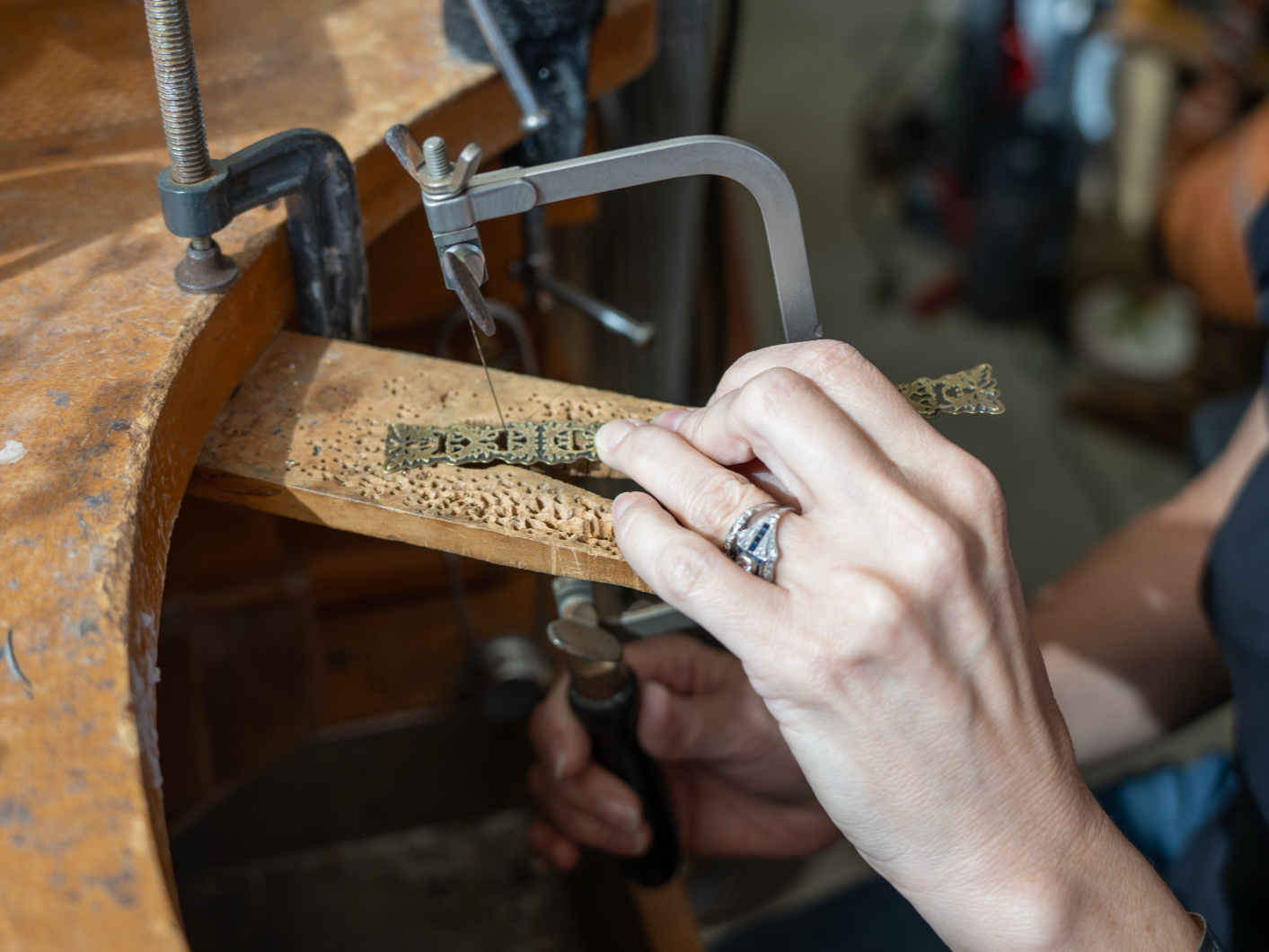
Handsawing jewelry components
Hammering cuff

Ink overlay on metal for etching
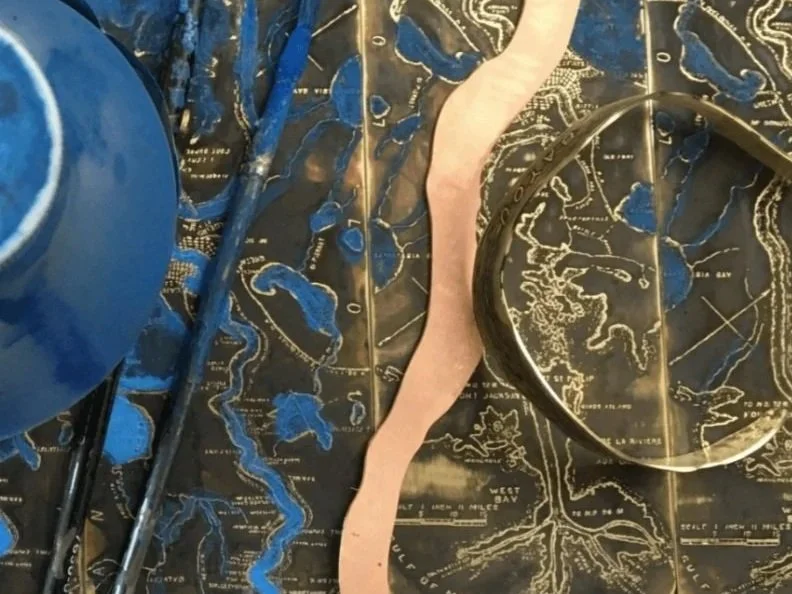
Handpainted patinas
Interview: Inspiration for Architectural Collection
This short interview shares how New Orleans architecture, decorative ironwork, and the changing built environment inform my architectural collections.
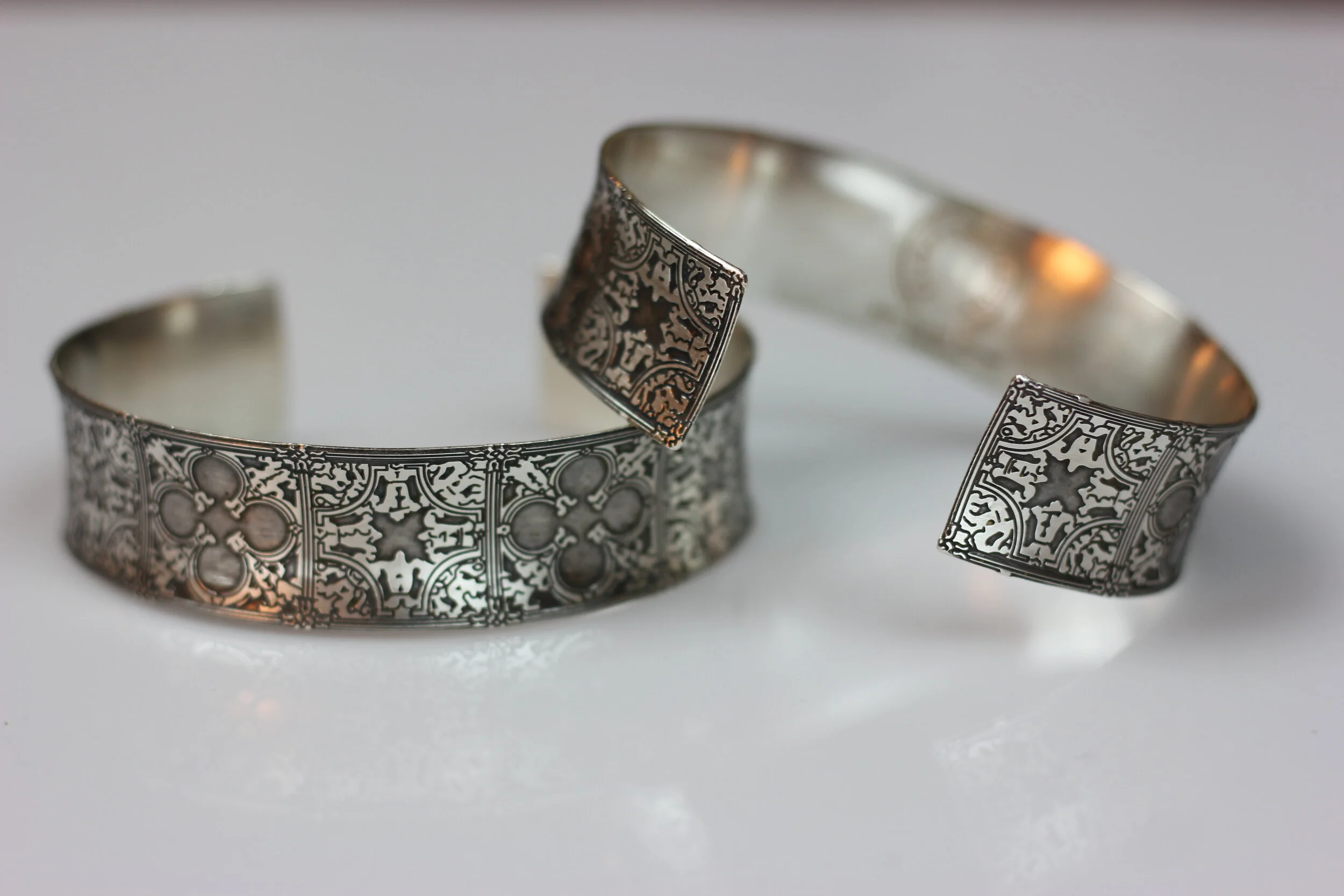
My etching process.
This short video shows an abbreviated version of my etching process.
I begin by researching historic maps and images, often through the Library of Congress. Because many of these sources are hundreds of years old, I carefully prepare and restore the images digitally before transferring them to metal.
The image is printed onto transfer paper with a laser printer. The toner acts as a resist, protecting parts of the metal during etching. Through heat and pressure, the image is transferred to the metal sheet. I then use various salts and acids to etch the exposed areas, creating the relief you can see and feel.
After the metal is neutralized, I remove the resist and apply several layers of hand-painted patina to bring depth and contrast to the recessed lines. The piece is then cut, sanded, filed, and hammer-formed before being polished to its final finish.
Follow my journey.


Inspired by cities and their relationship with the ever-evolving natural landscape around us.







Newsletter
Be the first to know about my new collection launches, special offers & other updates.
The Bayou St. John Etched Map Cuff Bracelet is crafted from an 1880s map of New Orleans’ bayou and the surrounding neighborhood. The Bayou was an important portage route used by Native Americans to travel from the lake to the river.
Living on Park Island in the bayou as a young adolescent was a very formative experience, revealing the beauty of the neighborhood and the city's architectural diversity.